


Céad míle fáilte. A hundred thousand welcomes. It is the oldest greeting on the island, and the Irish mean every word of it.
What is it about Irish hospitality that distinguishes it from the hospitality of, say, France or Italy or Japan, all of which are excellent in their own ways? It’s this: in Ireland, the welcome is a sincere expression of interest in the person who has arrived—who you are, where you’re from, what brought you here. The hotel is often just the setting for what is essentially a conversation, and the Irish are very, very good at conversations.
Think about it. The Irish have claimed four Nobel Prizes in Literature, a disproportionate share of the Western canon, and a new generation of writers turning out work of such quality that critics have started calling it a Golden Age of Irish letters: James Joyce, Oscar Wilde, Samuel Beckett, W.B. Yeats, Seamus Heaney, Jonathan Swift, Bram Stoker, George Bernard Shaw, Edna O’Brien, Colm Tóibín, Sally Rooney, Paul Lynch. Not to mention the ones who tell their stories in other forms, like Cillian Murphy, who, in a single glance, can make you feel the whole weight of the 20th century. Dermot Kennedy, busking his way through the streets of Dublin and Boston into every broken heart on the planet. Paul Mescal, who has cornered the market on complete and utter devastation. Saoirse Ronan, Colin Farrell, Róisín Murphy, Hozier. The list goes on, and will continue to go on, because Ireland will always imbue in their own the extraordinary gift of making you feel something.
It traces back to the seanchaí: the traditional Gaelic storyteller, bearer of old lore, who moved from community to community trading tales for a warm bed and a meal. For thousands of years, before anything was written down, the Irish kept their entire history alive through the spoken word: myths, genealogies, laws, love stories, the exploits of Cú Chulainn and Fionn Mac Cumhaill, all held in memory and passed mouth to ear across generations. When you grow up in a culture where the story is everything, where the gift of telling it is the most valued thing a person can possess, hospitality becomes inseparable from expression. You invite someone in because you want to talk to them. You feed them because the conversation deserves time. Céad míle fáilte, then, is not the doormat slogan it appears to be at all. It’s a worldview.
What follows are Irish accommodations that live, breathe, and beat this worldview—places where the welcome lands before you’ve set down your bag, where the food and the fire and the view are all part of the same sentence. Some are grand beyond reasonable expectation. Some are small and strange and wonderful. All of them, in their different ways, will leave you changed.
THE CASTLES
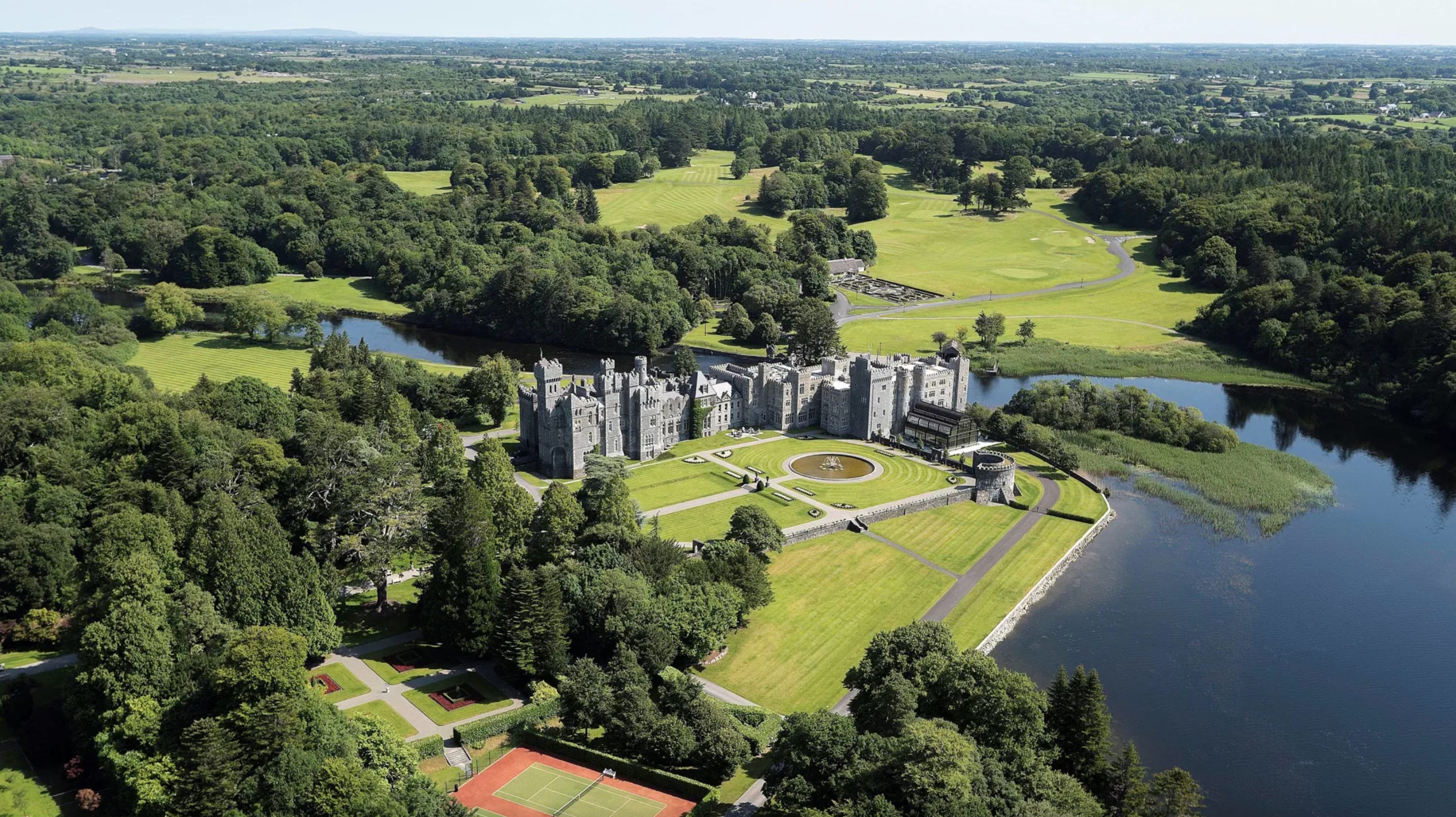
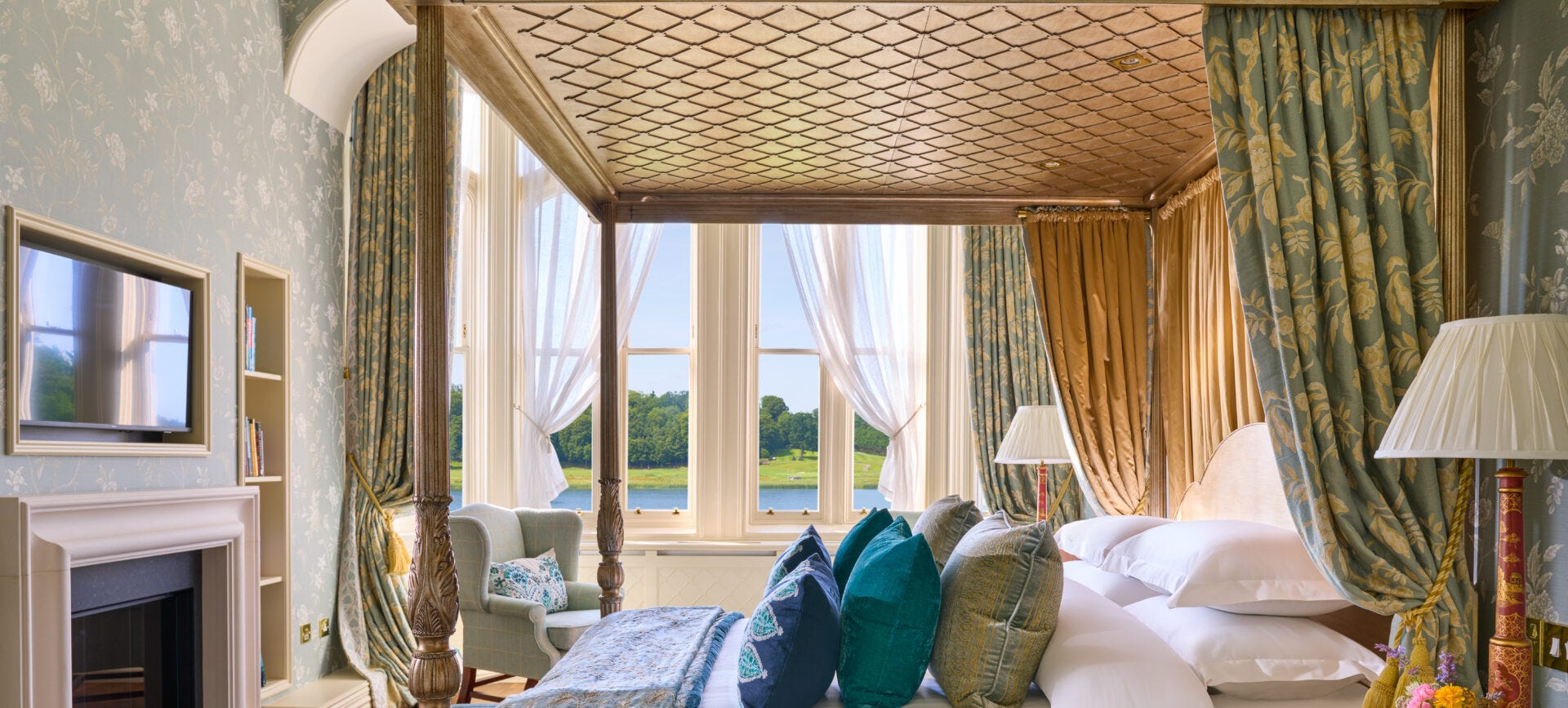
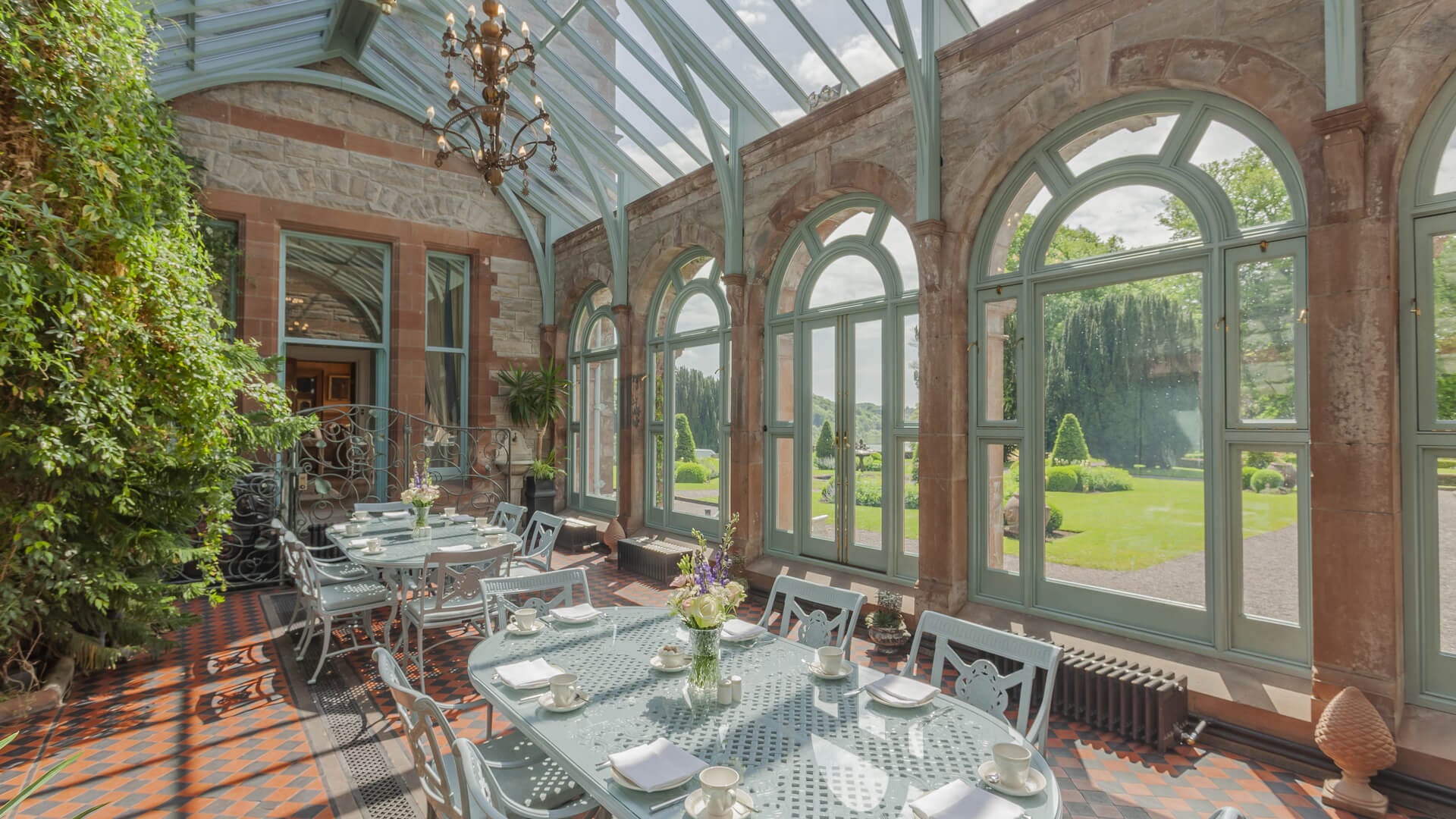
Ireland’s only Forbes Five-Star hotel and spa (for the seventh consecutive year), which tells you everything and also almost nothing, because Ashford resists reduction. The castle has stood on the shores of Lough Corrib since the 13th century; the Guinness family owned it for decades; today, its 83 individually designed rooms and suites, a nine-hole golf course, the George V Dining Room with its Waterford crystal chandeliers, and a private cinema occupy 350 acres of Mayo woodland and lake shore. The School of Falconry—Ireland’s first—is the detail people bring up most often, and rightly: sending a Harris hawk into a Connaught sky before breakfast is an irreplicable experience. The suite where Oscar Wilde once slept is available. The cocktail bar occupies a room where King George V was once received. It simply is what it is: the beginning and the end of any argument about Irish hotels.
Cong, Co. Mayo, F31 CA48
The ancestral seat of the O’Briens (direct descendants of Brian Boru, the only High King of Ireland), which means the portrait gallery lining your walk to dinner represents roughly a thousand years of Clare nobility, and you feel it. The present neo-Gothic castle was completed in 1835; the Earl of Thomond restaurant, with its crystal chandeliers, Venetian silk, and silver cloches, earned a Michelin star in 1995. The cocktail bar occupies what was once the family library, an octagonal room with window seats overlooking the castle lawns where Dromoland’s guests have been having excellent evenings for a very long time. The 18-hole parkland golf course runs along the river. The estate, which holds a Michelin Key, is eight miles from Shannon Airport, which is either very convenient or, depending on your mood at departure, an argument for staying longer.
Newmarket-on-Fergus, Co. Clare
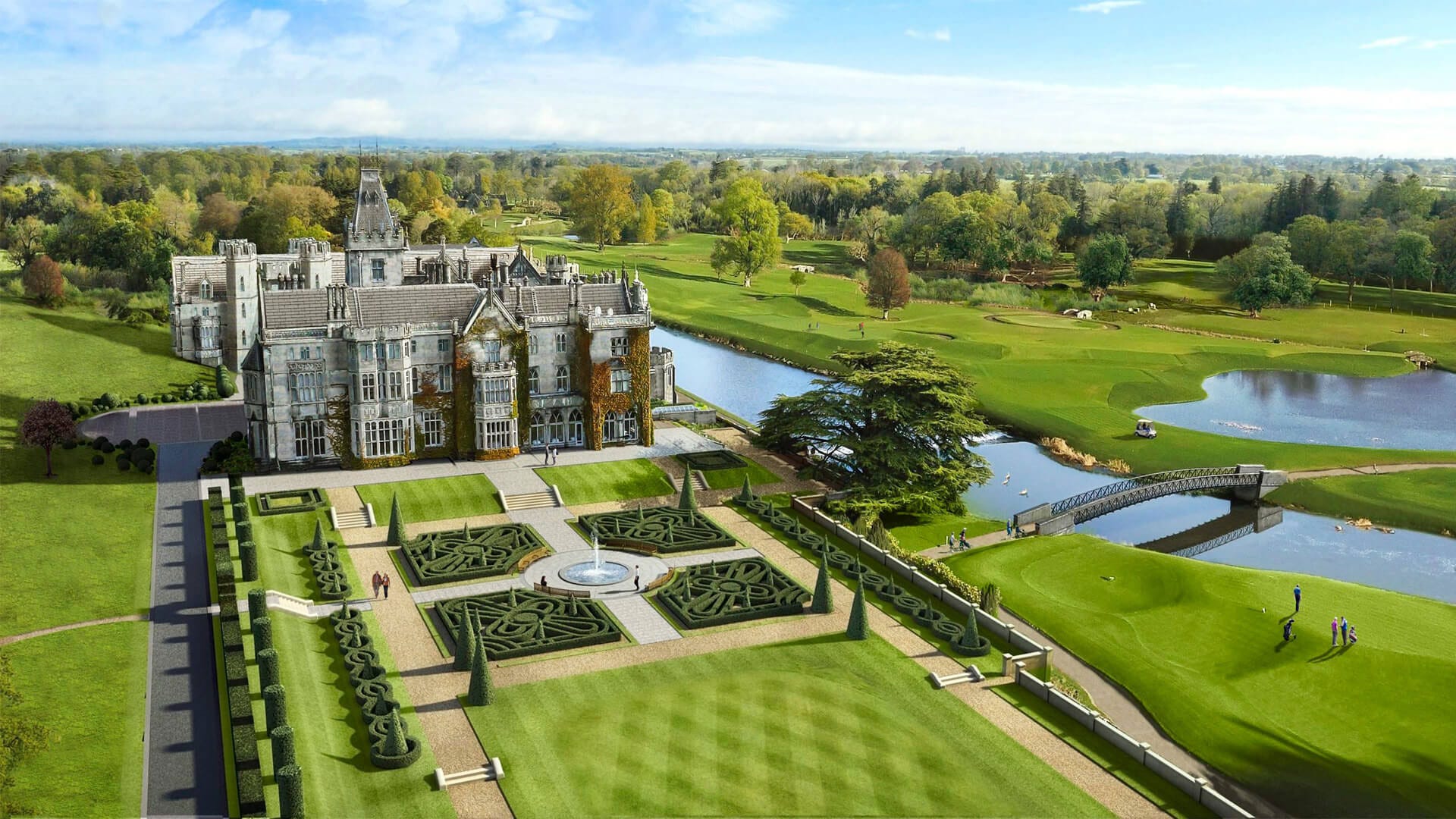
English novelist William Makepeace Thackeray called Adare the prettiest village in Ireland, and the manor at its end—Gothic Revival, commissioned by the Earl of Dunraven and completed in the 1860s—does not undermine this claim. The minstrel’s gallery in the dining room is the kind of architectural detail that both stops and ignites conversation with limestone carvings, 365 windows (one for each day of the year, by design), 52 chimneys (for the weeks), 7 stone pillars (for the days of the week), and 4 towers (for the seasons). A recent renovation was done with real money and genuine taste, restoring the manor without sanitizing its character—and resulting in Three Michelin Keys (the highest possible honor). Those who are lucky enough will join for the Ryder Cup in 2027 (room for one more?); those who aren’t would do well to visit in November when the thatched cottages in the village are doing their autumn thing, and the roads finally belong to the people who live on them.
Adare, Co. Limerick
Eccentric in the specific Anglo-Irish mode that is one of the great endangered aesthetics of these islands, which is to say, full of character that has accumulated rather than been designed, objects with histories, rooms with personalities, the sense that the house has opinions about you. The Leslies have been in Monaghan since 1660, and every generation contributed something to the pile. The equestrian program is world-class. The ghost, by multiple accounts, is a benign presence. Mick Jagger attended a wedding here (Paul McCartney’s, to Heather Mills in 2002). Stay for the stories, which at Castle Leslie are inexhaustible—as any good Irish story should be.
Glaslough, Co. Monaghan
THE COUNTRY HOUSES
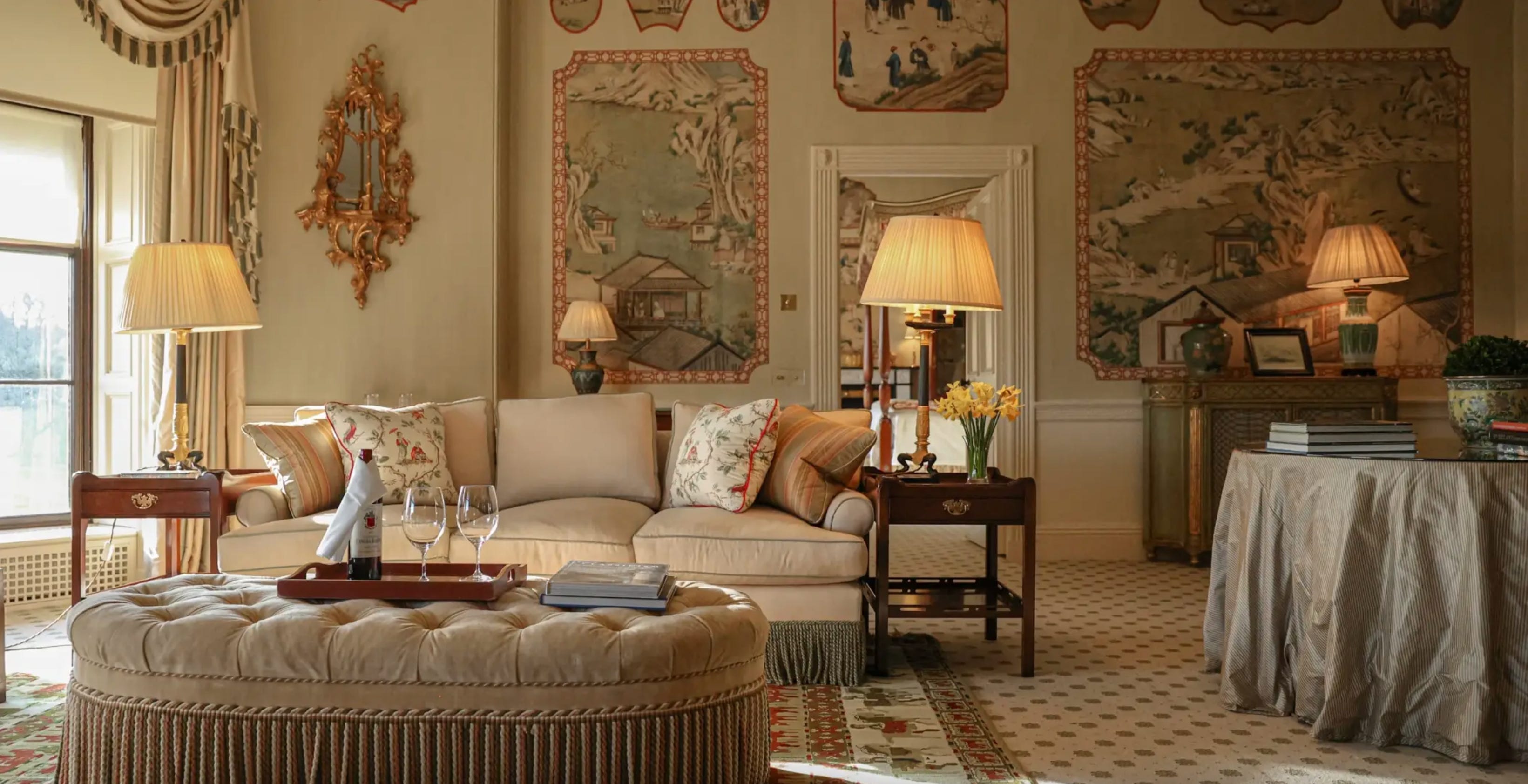
The most lavish Regency mansion in Ireland, according to every architectural historian who has written about it—and after an eight-year restoration (longer than it took to build in the first place), Ballyfin reopened in 2011 as a hotel with 21 rooms set within 614 acres. The restoration, led by Chicago-based owners Fred and Kay Krehbiel, was meticulous to an almost irrational degree: craftsmen restored the gilded stuccowork and inlaid floors by hand; a Roman sarcophagus bath, brought to Ballyfin by Sir Charles Coote in 1822 after his Grand Tour, was kept in situ; the secret door in the eighty-foot library that leads to the conservatory still works. The estate passed through the hands of the Duke of Wellington’s family before the Cootes built the house. There are 16 counties visible from the top of the round tower.
Ballyfin, Co. Laois
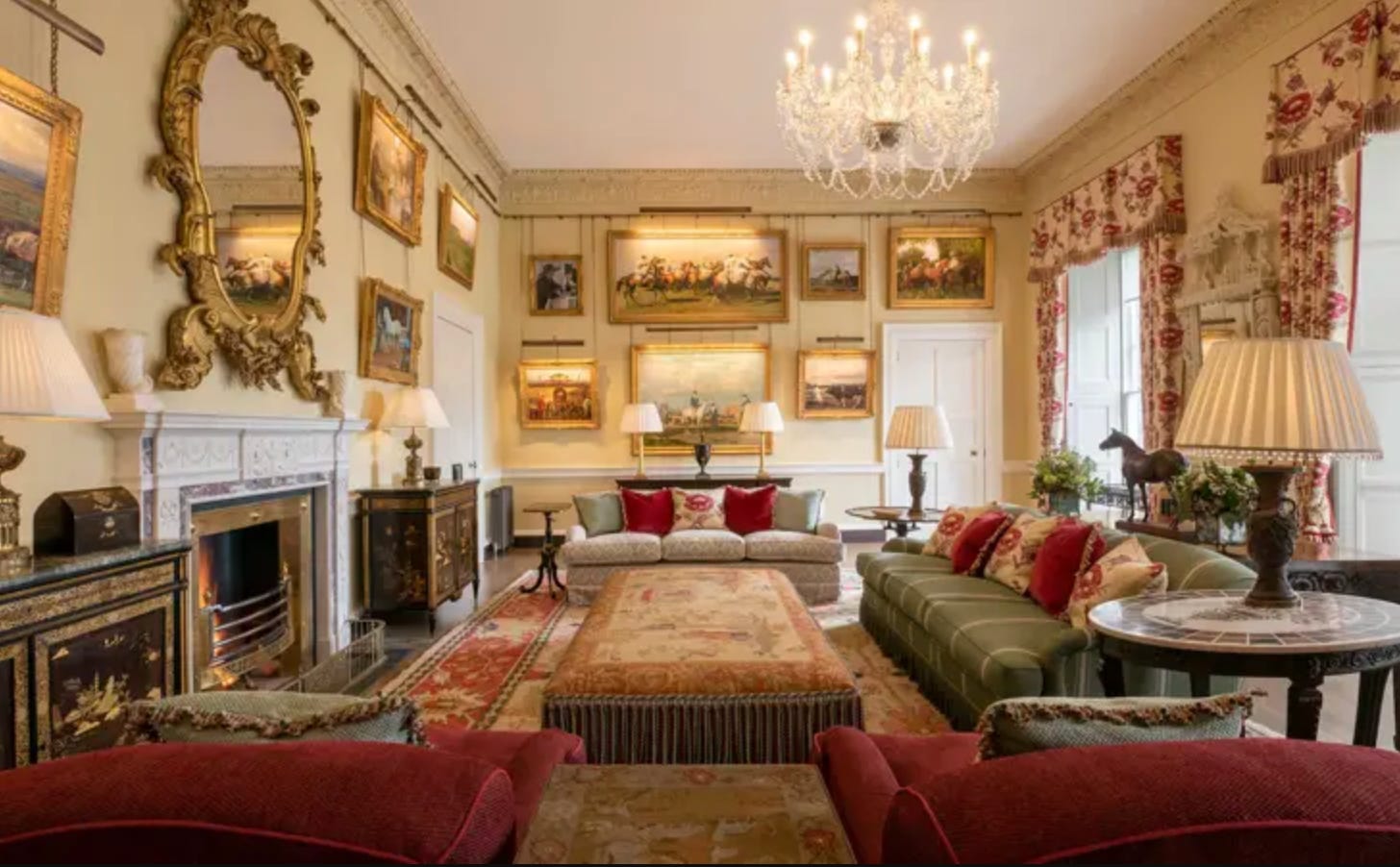
The Palladian mansion was designed in 1732 by Sir Edward Lovett Pearce—the same architect who built what is now the Bank of Ireland on College Green—for Archbishop Theophilus Bolton, who also happens to have left a bequest of £100 to his godson, one Arthur Guinness, who used it to secure the lease on a brewery at St. James’s Gate. The original well where Arthur’s father Richard brewed ale for the Archbishop’s household using hops from the Palace garden has been excavated and is now visible at Mikey Ryan’s, the hotel’s sister pub next door. The rock looming at the end of the garden—that’s the Rock of Cashel, with its 13th-century Gothic cathedral and the last Romanesque frescoes in Ireland—is 30 meters from the front door. The hotel holds Two Michelin Keys, and its restaurant, The Bishop’s Buttery, holds a Michelin Star. The whole thing is, in the best possible way, too much to absorb in a single stay.
Main Street, Cashel, Co. Tipperary
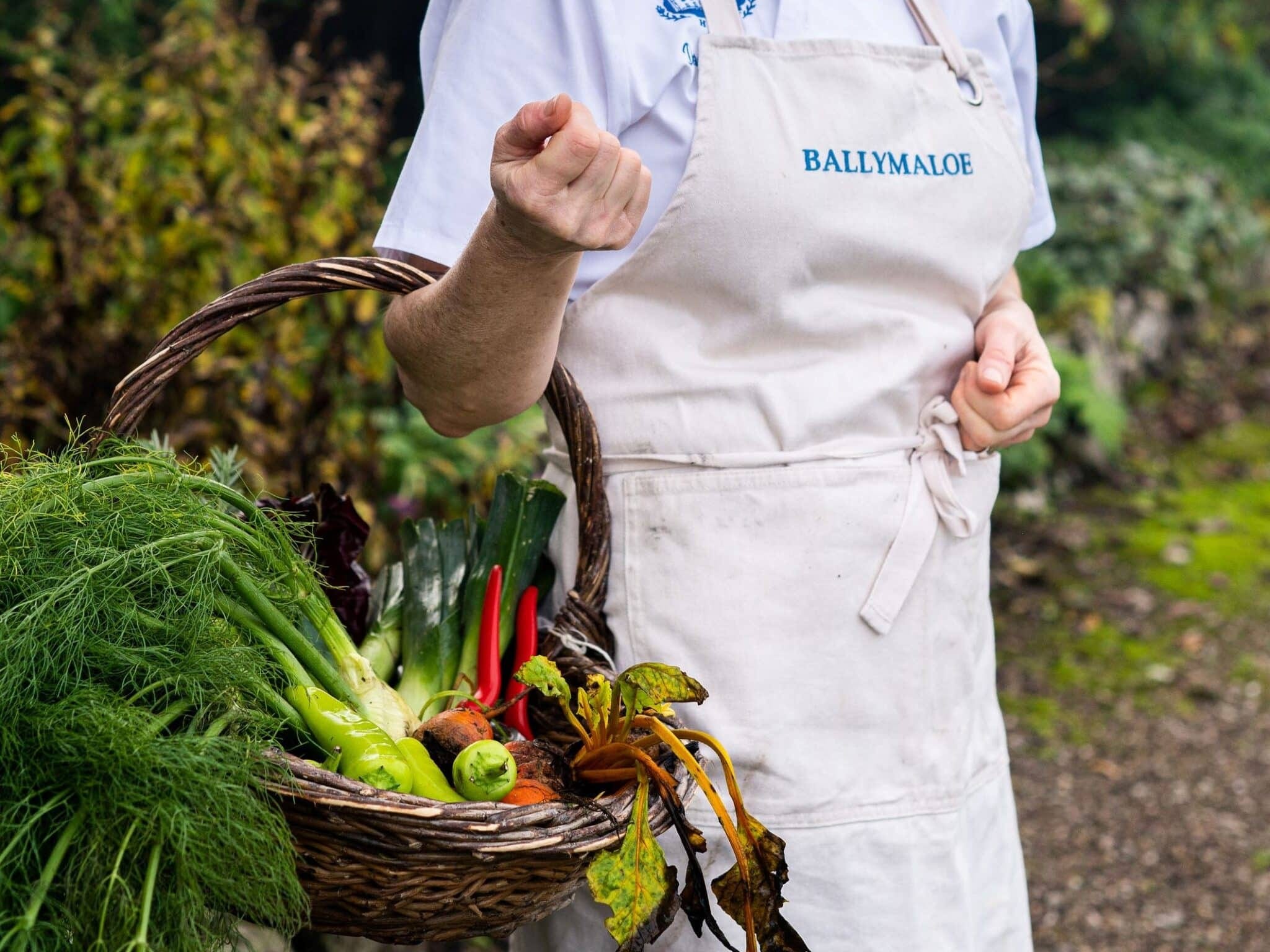
The soul of Irish food lives on forty acres in East Cork, and it’s been there since Myrtle Allen opened her dining room in 1964. The cookery school, opened in 1983 by her daughter-in-law Darina, is now among the most influential in the world (Ballerina Farm followers will recognize it). The farm is still working; the kitchen garden still supplies the restaurant; the family—four generations of Allens—still runs it. Ballymaloe is not a luxury hotel in the conventional sense but something more essential, and frankly, better. Céad míle fáilte made edible.
Shanagarry, Midleton, Co. Cork
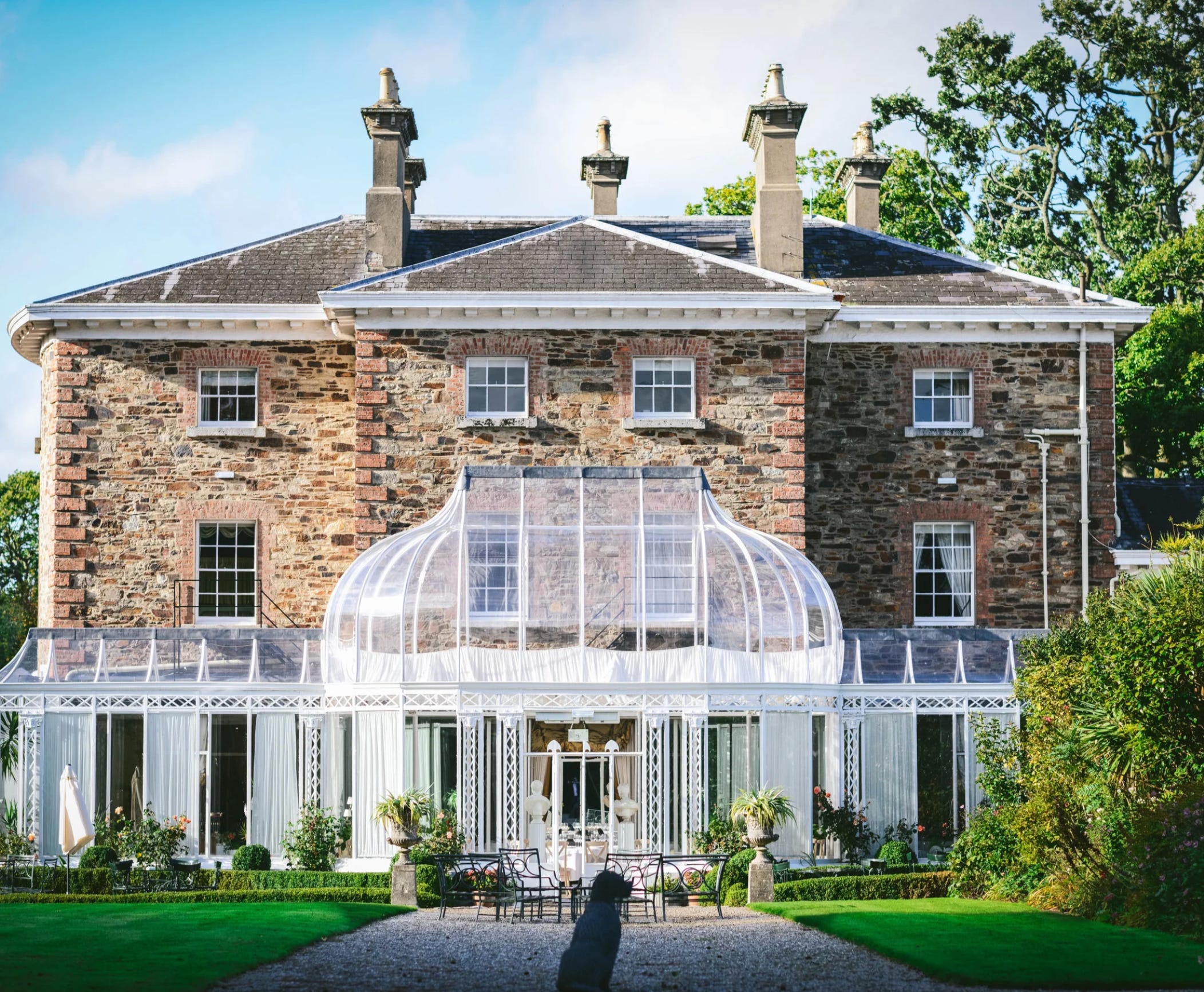
A Regency dower house in Courtown, run by the Bowe family for over four decades, with the ease of people who have long since stopped trying to impress anyone and instead focus on everything being exactly right. The walled garden supplies the kitchen. The conservatory dining room—trailing plants, candlelight, an unhurried nature that suggests the evening can extend as long as you’d like—is among the most romantic rooms in Ireland. Wexford is an underrated county: it has some of the best beaches in the country, the oldest Norse town in Ireland, and an international opera festival that draws serious singers every October.
Courtown Road, Gorey, Co. Wexford
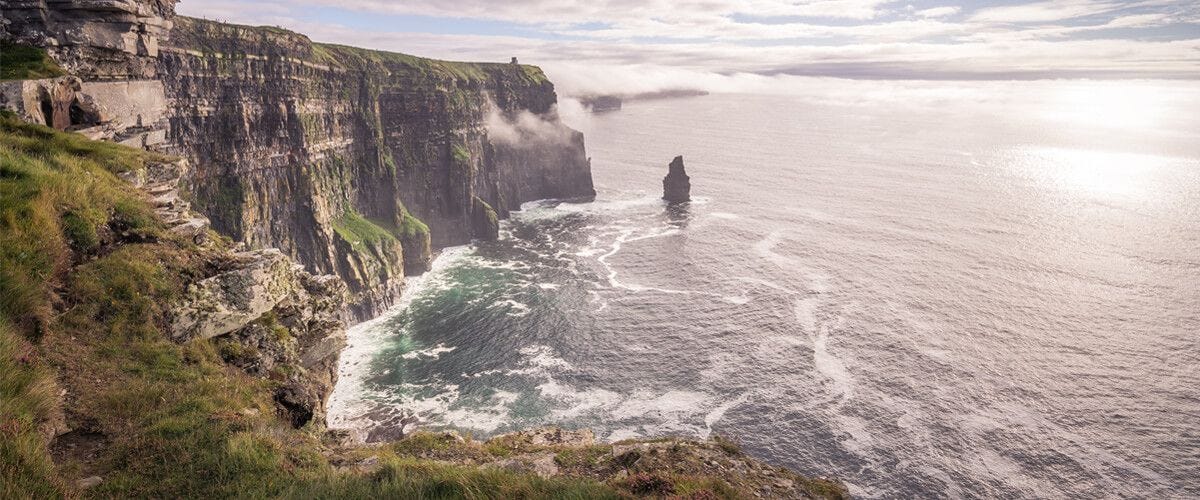
Not a castle (the name comes from a nearby crossroads), but situated in the Burren, the 250-square-kilometre limestone plateau in Clare that contains over 700 species of flowering plants, supports Arctic, Mediterranean, and Alpine flora simultaneously, and looks like something from another planet (so much so that Lewis Carroll is said to have drawn on it for Wonderland). Gregans sits at its edge. The food is among the finest in the west of Ireland. The wine list reflects genuine knowledge and genuine enthusiasm, which is a rarer combination than it should be.
Ballyvaughan, Co. Clare
THE WILD SOUTHWEST
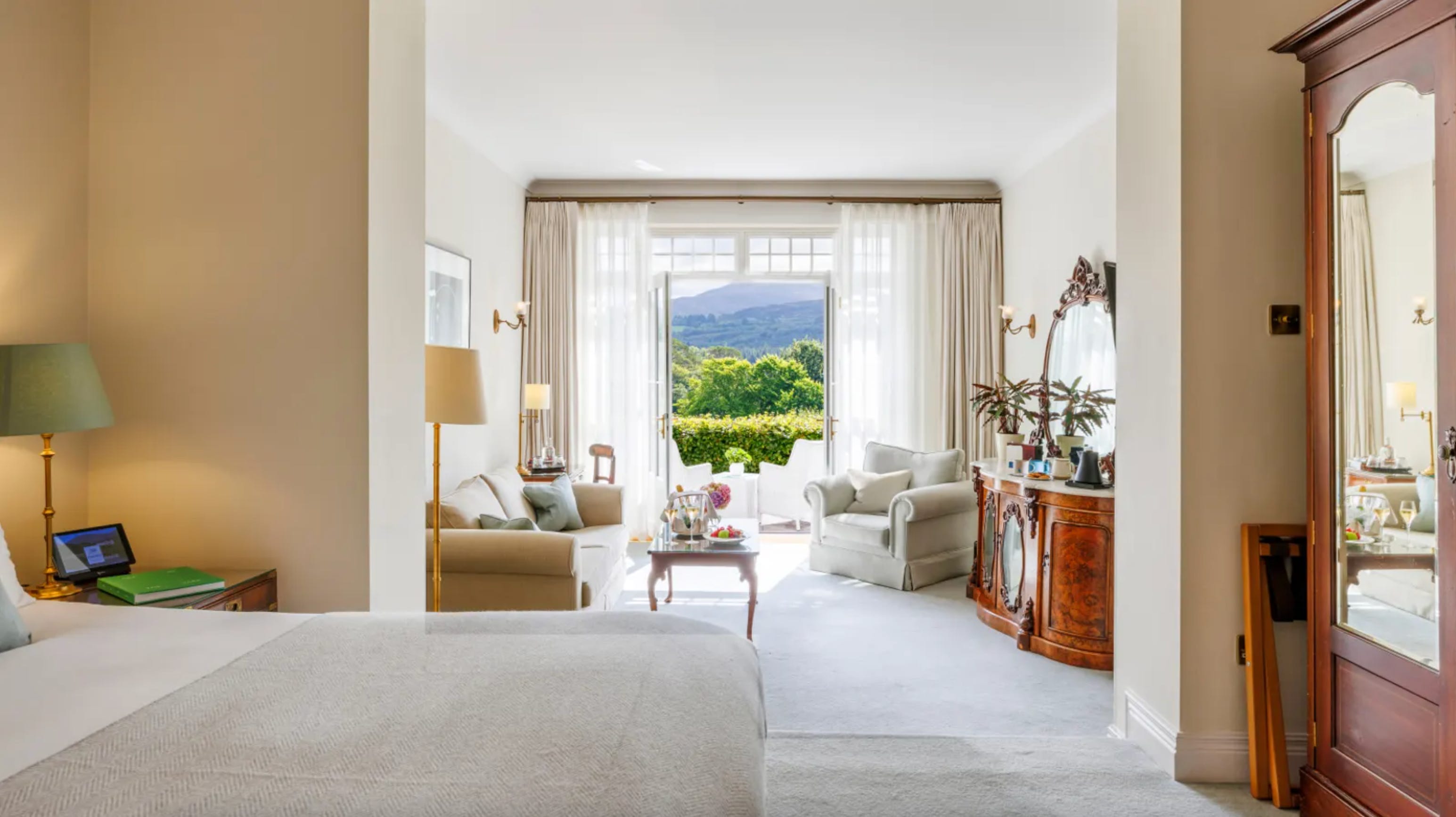
Francis Brennan ran this Victorian railway hotel—built in 1897 to serve passengers arriving into Kenmare from the Great Southern and Western line—for thirty years and turned it into a standard for Irish hospitality: personal, attuned, warm without being cloying. The spa was built for Atlantic weather, which is to say for necessity as much as indulgence. The garden is impeccable. The view from the upper floors and the terrace down the Kenmare River estuary to the Macgillycuddy Reeks is one of the great free pleasures in Kerry, which is already competitive in this category. It’s the kind of thing that becomes, without your permission, a reference point for all future views.
Kenmare, Co. Kerry
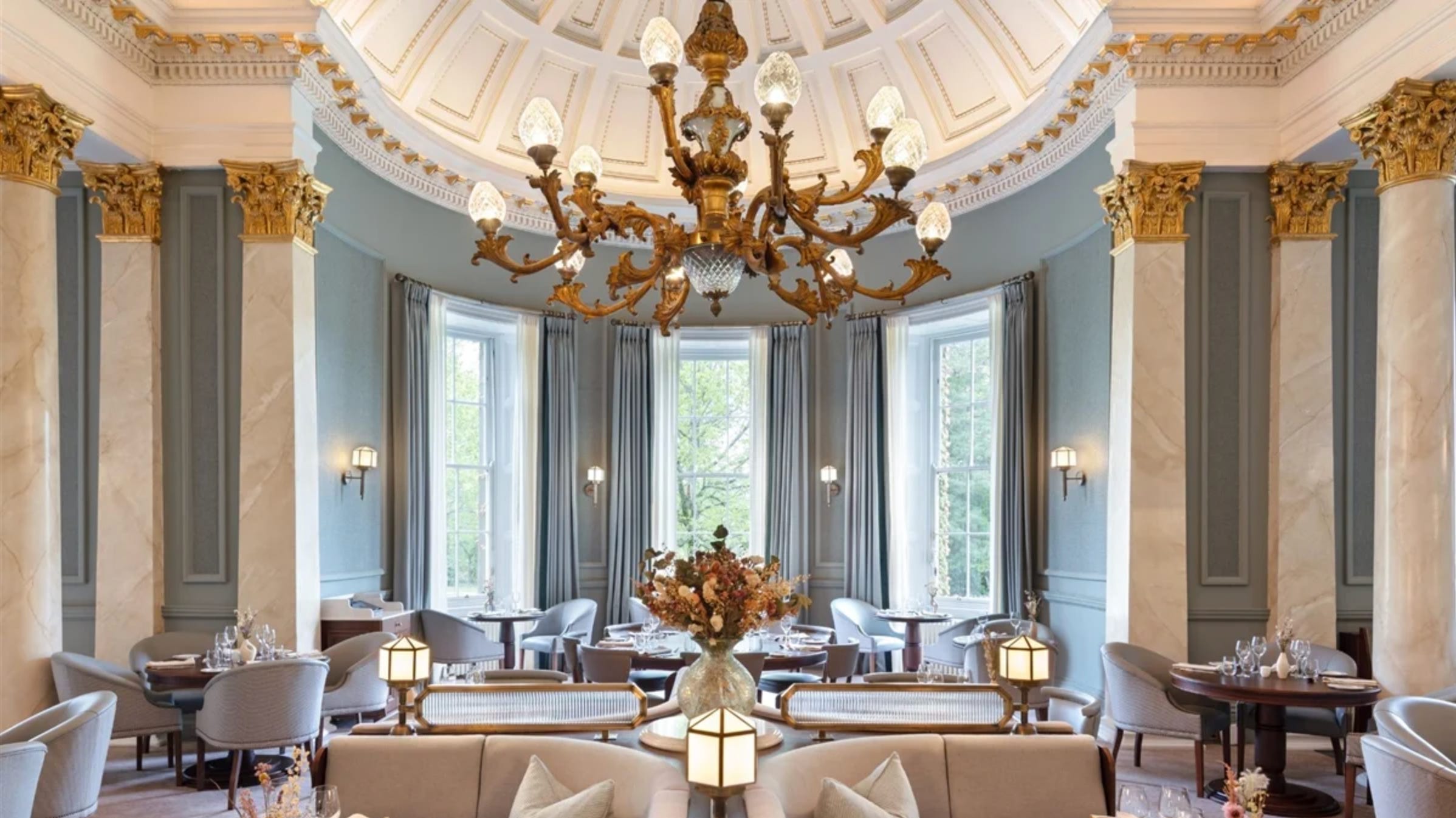
Open since 1854, built to receive Queen Victoria from the train, and still doing the grand Victorian hotel thing with a confidence that comes only from 170 years of practice. The National Park arrives essentially at the front door—you can walk directly into one of the most beautiful natural landscapes in Europe from the lobby, which I cannot overstate as a selling point. The jaunting car to the Gap of Dunloe and afternoon tea in the main lounge are full productions, and you should let them be them.
Railway Road, Killarney, Co. Kerry
THE CITIES
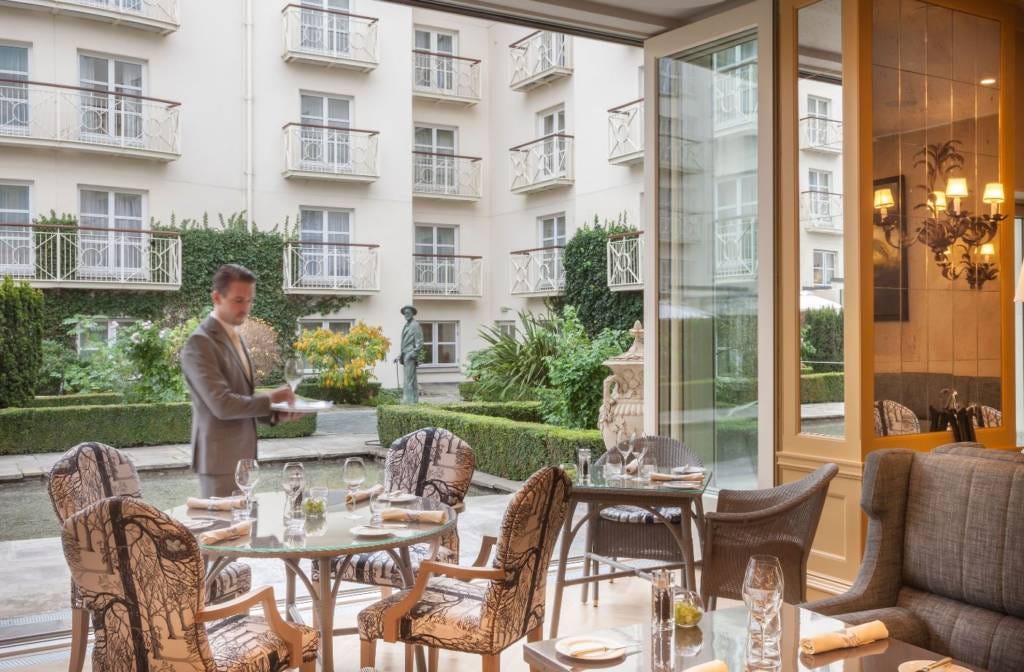
Four Georgian townhouses—numbers 21, 22, 23, and 24 Merrion Street, built in the 1760s—assembled into Dublin’s finest hotel, which opened in 1997 and has spent the time since acquiring one of the most significant private collections of 19th- and 20th-century Irish art in the country. Over 100 works, from owner Lochlann Quinn’s personal holdings: Jack B. Yeats’ self-portrait The Hour of Sleep sits over the front hall; Louis le Brocquy’s Woman in White hangs near the fireplace; works by Sir John Lavery, Mainie Jellett, Roderic O’Conor, and William Scott line the corridors. Guides from the National Gallery of Ireland (a two-minute walk) lead tours of the collection on request. The Garden Room restaurant is where Dublin lunches when it wants to be left alone; the basement cocktail bar is for everyone else. It is, in other words, exactly the right hotel for this particular city.
Upper Merrion Street, Dublin 2, D02 KF79
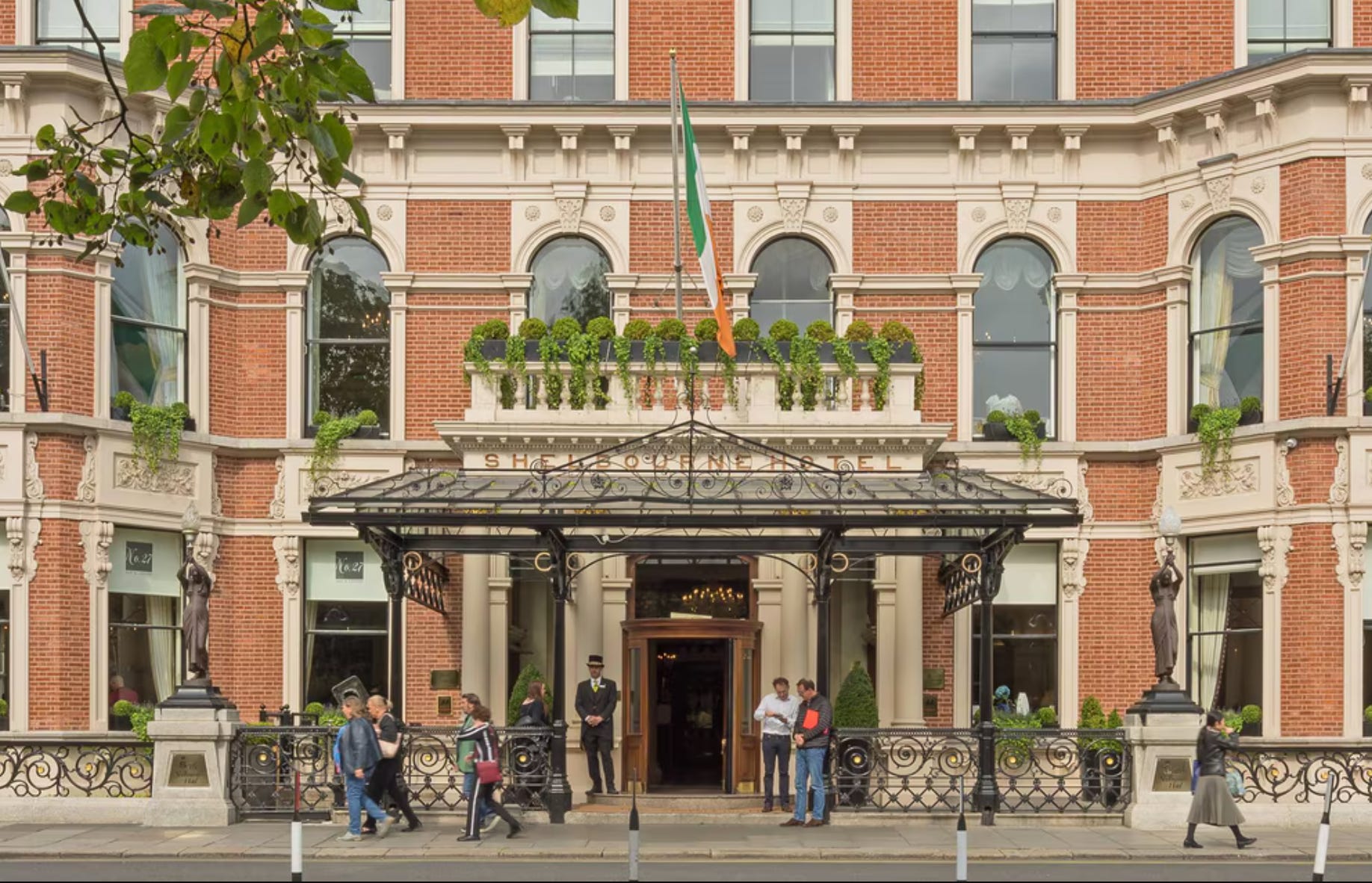
Founded in 1824 by Martin Burke of Tipperary (who named it after the Earl of Shelburne and made it the first hotel in Dublin to be lit by gaslight) and so woven into the life of the city that it is less a hotel than an institution with rooms. The Irish Constitution was drafted in Room 112 in 1922, chaired by Michael Collins; the room, now called the Constitution Room, still contains the original oak table and chairs. The Horseshoe Bar is where the Chieftains were first assembled, after Seán Ó Riada suggested the idea to Paddy Moloney over a drink; Brendan Behan, Seamus Heaney, and Patrick Kavanagh were regulars. JFK stayed in 1963. The Lord Mayor’s Lounge does afternoon tea under a Waterford Crystal chandelier, attended by a resident pianist on weekends. The building is undergoing a €50 million renovation from mid-2026; go before or after, but go.
27 St. Stephen’s Green, Dublin 2
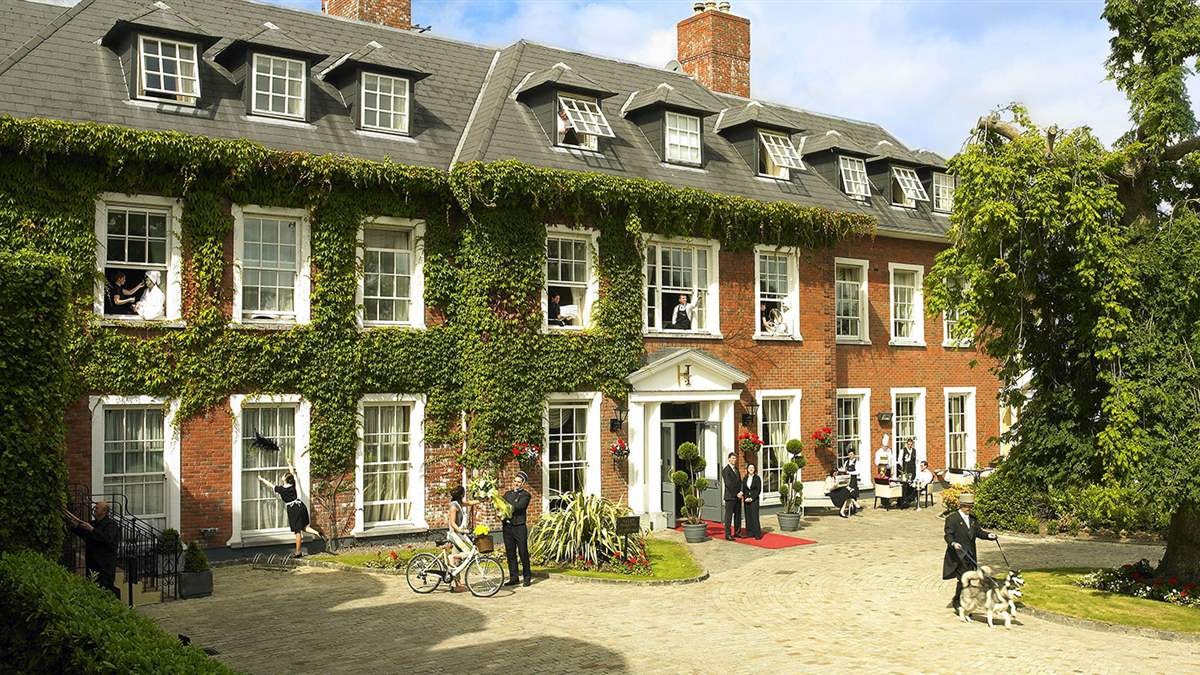
Redbrick Victorian, two acres of walled gardens, three minutes from the city centre but acoustically a different world. Family-owned and independent in a way that gives Hayfield a personality you notice the moment you arrive. The 88 rooms and suites include some of Cork’s most considered accommodations. The spa has a 17-metre pool. The kitchen sources with the seriousness that Cork as a food city demands (which, we know, is a lot).
Perrott Avenue, College Road, Cork City, Co. Cork
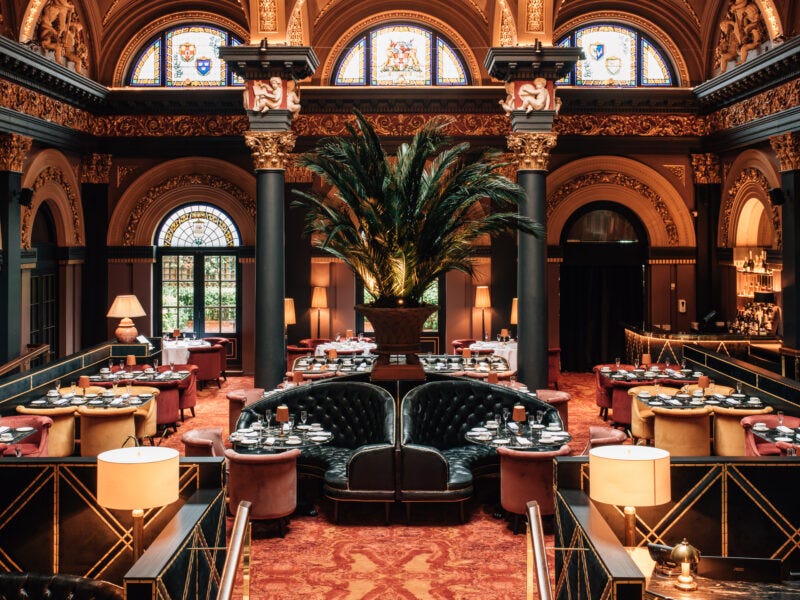
The Ulster Bank headquarters was built in 1860 on Skipper Street in what is now the Cathedral Quarter, converted into a hotel in 2006, and extended in 2010, and the building’s Grade A listed status means its Victorian grandeur has been carefully preserved. The Great Room restaurant, under its original glass cupola and a Tyrone Crystal chandelier (the largest in Ireland) has held two AA Rosettes and a wine list of over 200 bottles. There are 57 bedrooms, and suites named after Belfast writers and poets. Bert’s Jazz Bar is the only dedicated live jazz venue in the city, seven nights a week.
35 Waring Street, Belfast, BT1 2DY
THE ONES THAT MIGHT SURPRISE YOU
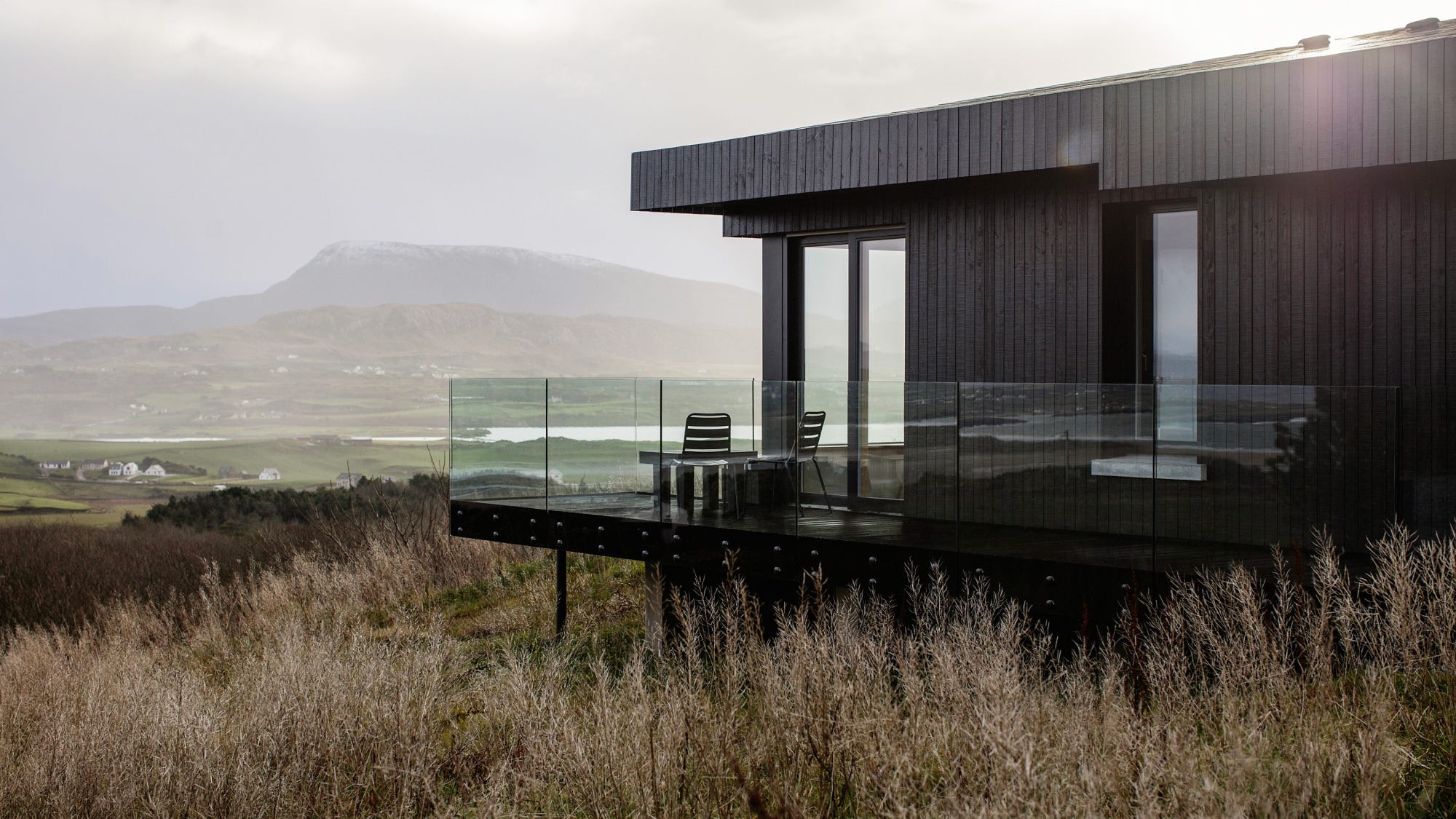
Four rooms. Just four rooms on the Horn Head peninsula above Dunfanaghy, in the Irish-speaking Gaeltacht of north Donegal, opened in 2017 by Dubliners Cathrine Burke and Niall Campbell after ten years of planning. The architecture, by local firm MacGabhann, was designed to recall a traditional longhouse and to become part of the landscape rather than stand against it; the exterior is blackened larch; the rooms are furnished with custom-crafted oak beds, pure Irish wool duvets, handwoven Donegal tweed throws by Eddie Doherty (one of the last hand-loom weavers in Ireland), and Fanad granite cut by local stonemason Thomas Carr. Breakfast arrives through a hatch in your room. There is a wood-fired sauna inspired by Celtic sweathouses, and a private seaweed bath. Views span across Sheephaven Bay to Muckish Mountain. The Evening Standard named it one of the world’s most sustainable hotels. It is, by any measure, exceptional.
Horn Head Road, Dunfanaghy, Co. Donegal
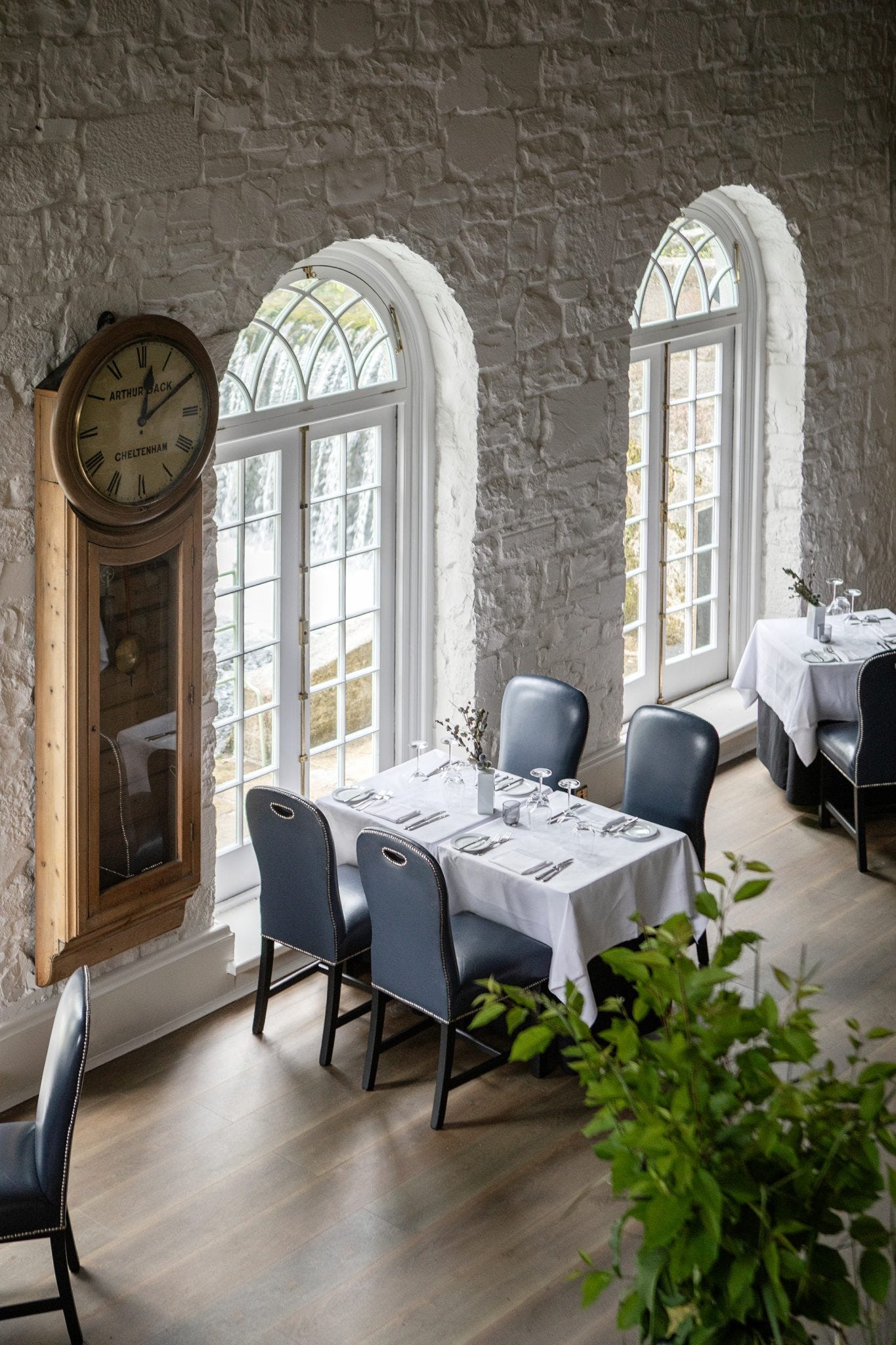
A collection of 18th-century stone mill buildings along the Grand Canal in Kildare, restored by chef Neven Maguire into a boutique hotel that operates with the sensibility of a small Burgundian estate that has taken root in the Irish midlands—which is to say: this is more of a restaurant with a hotel than a hotel with a restaurant. The market garden supplies the kitchen with a seriousness that makes most “farm to table” claims feel approximate. The rooms, each individually designed within the old stone walls, defer to the buildings’ age as they should.
Celbridge, Co. Kildare